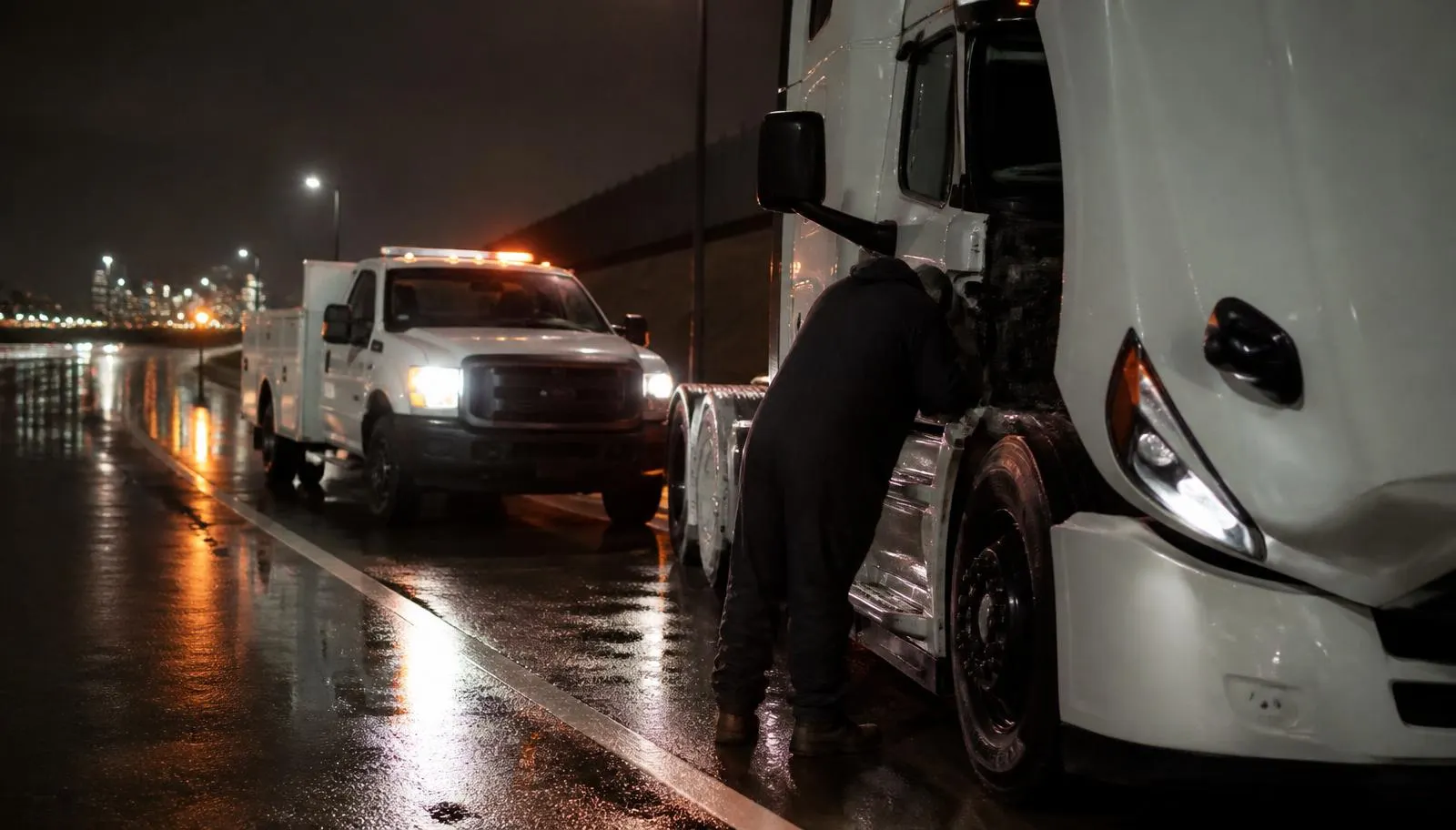
Mobile diesel mechanic repairing a semi truck on an Atlanta highway shoulder at night

Atlanta & Surrounding Areas · Open 24/7

Mobile Truck Repair in Atlanta, GA

24/7 mobile truck repair and roadside diesel repair for commercial trucks, semi trucks, trailers and work fleets. We bring the shop to you — on the shoulder of I-285, at the truck stop, at the warehouse dock or at your yard anywhere in Metro Atlanta.

  • Roadside Diesel Repair
  • Semi Truck Repair
  • Trailer Repair
  • Commercial Truck Repair
  • Fleet Service

Truck down right now? Calling is the fastest way to get a mobile diesel tech rolling toward you.

24/7 Mobile Service
Roadside Truck Repair
Diesel Diagnostics
Fleet Service
Atlanta Metro Coverage

Open 24 Hours a Day

24/7 Emergency Mobile Truck Repair in Atlanta

Breakdowns do not wait for business hours. A blown air line at 2 a.m. on I-75, a no-start in a cold warehouse lot before a morning delivery window, or a trailer with a flat tire on the Perimeter — every hour a truck sits is money off the load and pressure on your hours of service. ATL Mobile Truck Repair operates as a mobile service, which means our diesel technicians travel to the truck instead of forcing you to find a tow into a shop bay.

When you call, we ask a short set of questions: where the truck is sitting, what the truck and engine are, what symptoms you are seeing, and whether the unit is in a safe position. Those details let the technician load the right parts, fluids and tooling before rolling out, which is often the difference between a single-visit repair and a return trip.

Many roadside calls in Atlanta are resolved on the spot: air leaks, batteries and charging faults, starters, alternators, belts, hoses, coolant leaks, sensors, fuel filters, DEF and emissions faults, brake issues, lighting problems and tire work. When a repair genuinely requires a shop, we tell you plainly rather than burning your clock on the shoulder.

Many of these failures trace back to how trucks are worked here. For the wider pattern, see our breakdown of Atlanta truck breakdown conditions — heat, idle time and stop-and-go freight drive most of what we see roadside.

Safety comes first on every roadside job. Technicians work with the truck properly secured, wheels chocked where appropriate and warning devices out. If a unit is in an unsafe position — a live lane, a blind curve, or a narrow shoulder — we will tell you before we start and help you plan a safer alternative.

Roadside Breakdowns

  • Highway shoulder and ramp calls
  • Truck stop and rest area service
  • Warehouse, dock and yard calls
  • Overnight and weekend dispatch

Common Emergency Repairs

  • Air system and air leak repair
  • No-start, batteries and charging
  • Cooling system and overheating
  • Fuel system and filter changes

What To Have Ready

  • Exact location, exit number or mile marker
  • Unit number, year, make and engine
  • Fault codes or dash warning lights
  • Whether the truck is loaded

Straight Answers

  • Clear description of the failure
  • Repair vs. tow recommendation
  • Scope explained before work begins
  • No pressure, no upsell games
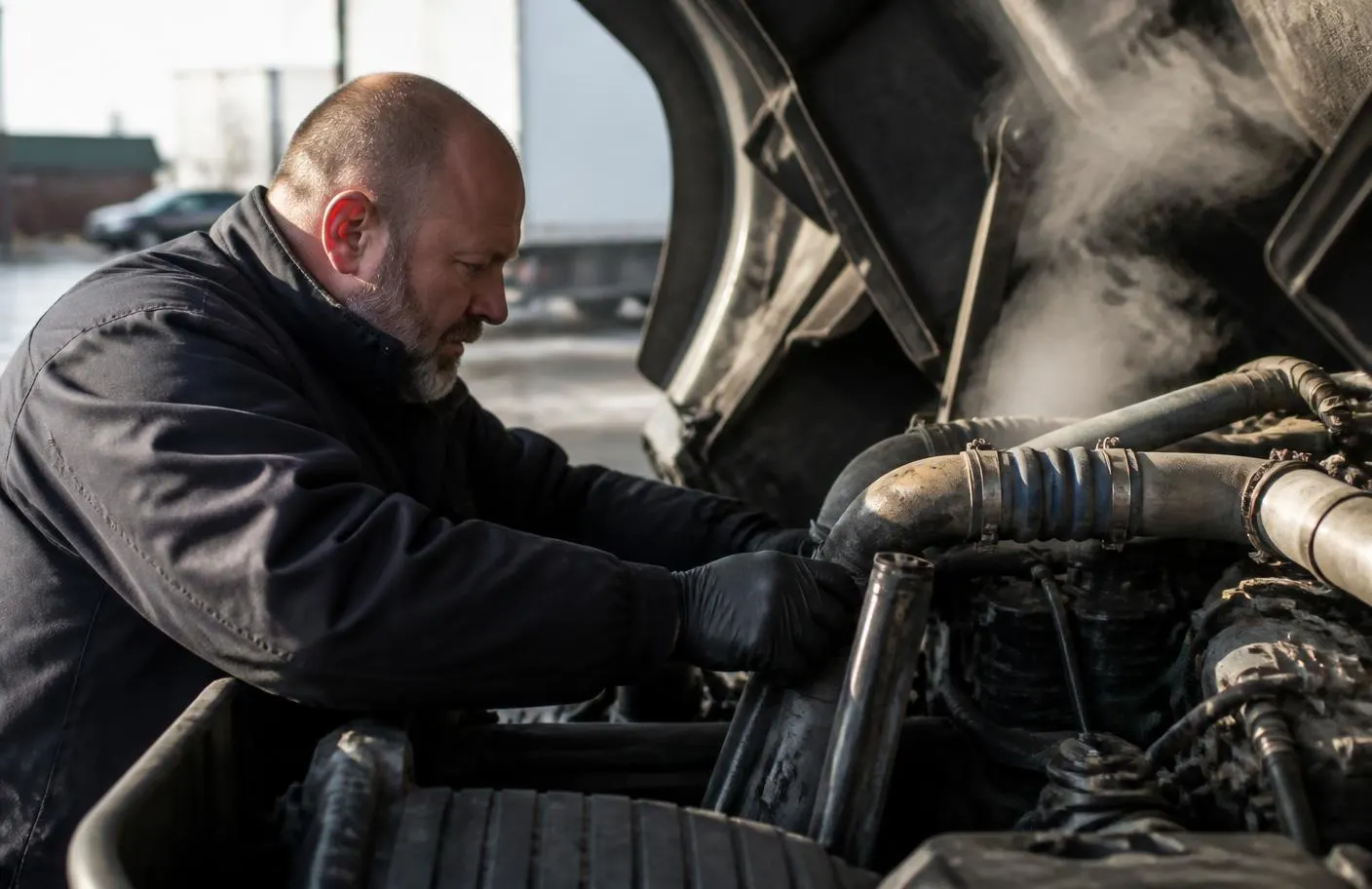
Diesel technician inspecting radiator hoses and cooling system on an overheating truck engine

Mobile Diesel Services

Main Mobile Truck Repair Services

A full range of mobile commercial truck repair performed at your location across Atlanta and the surrounding metro. Class 6 through Class 8, day cabs, sleepers, straight trucks, box trucks, trailers and reefer units — grouped below so you can find your issue fast.

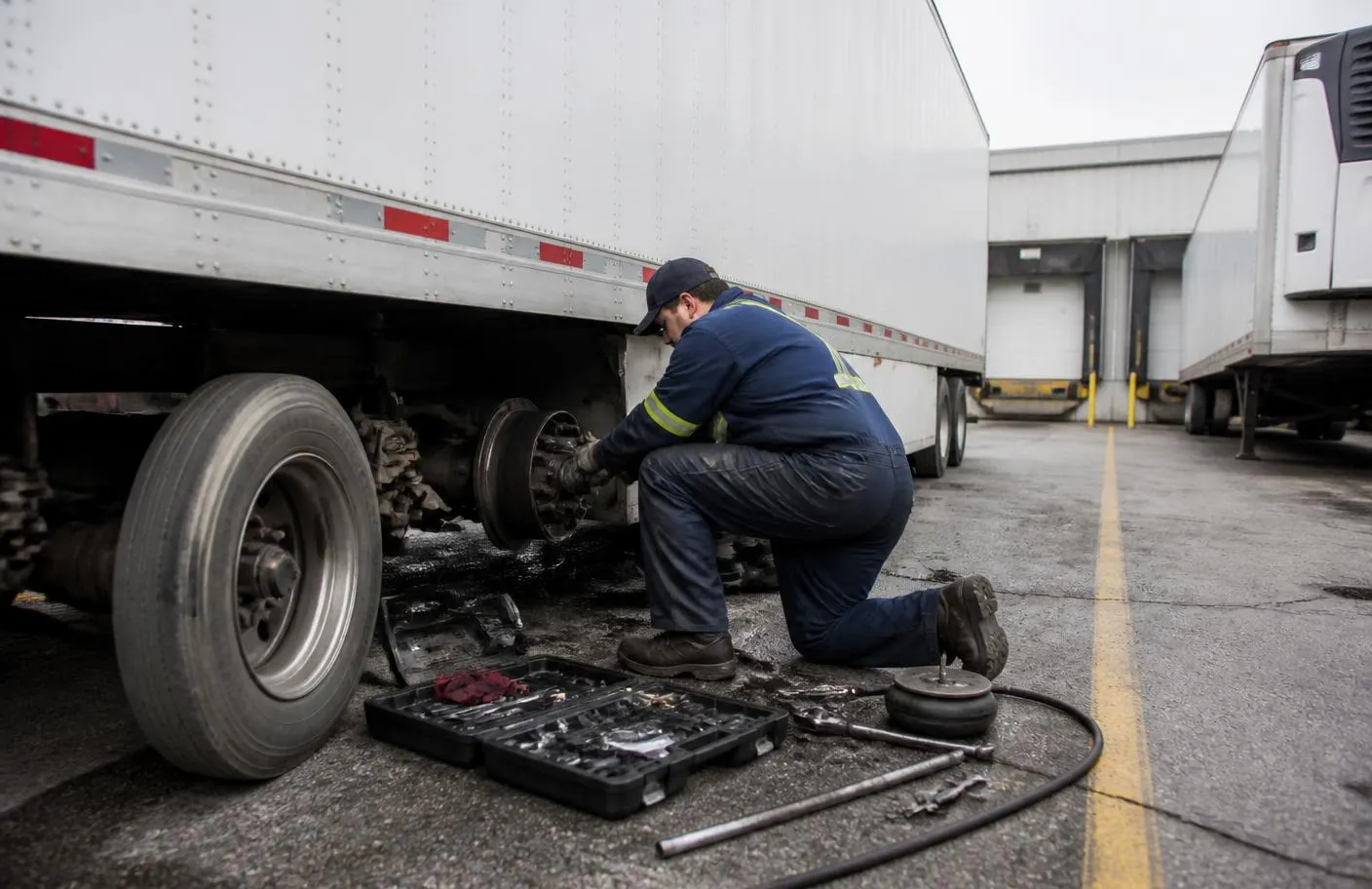
Mobile technician servicing trailer brakes and wheel end at a warehouse loading dock

Emergency & Roadside Repair

The calls that cannot wait. When a truck stops moving on I-285, I-75, I-20 or in a warehouse lot, these are the services that get it rolling again.

Emergency Roadside Truck Repair

Roadside truck repair in Atlanta means a technician, tools and parts come to the truck wherever it stopped — the shoulder of the Connector, an exit ramp off the Perimeter, a truck stop in Austell, a dock in College Park or a yard in Forest Park. The goal on every roadside call is a safe, correct repair completed on site so the load keeps moving.

Common Problems

  • Sudden loss of air pressure or a spring brake lockup
  • Engine shutdown, stall or a truck that will not restart
  • Blown tire, damaged wheel hardware or a shredded casing
  • Coolant, oil, fuel or DEF leaking onto the shoulder
  • Dash warning lights and derates mid-route

Diagnostics & Repairs

  • On-scene triage and a walk-around before anything is opened up
  • Air leak isolation, line and fitting replacement
  • Jump starts, battery and cable replacement, charging tests
  • Belt, hose, clamp, sensor and connector repairs
  • Fluid top-off and leak containment to finish the run safely

On-Site Scenario

A loaded dry van drops air on the I-285 shoulder near Camp Creek at 1 a.m. The technician arrives, chocks the wheels, traces the leak to a cracked fitting behind the cab, replaces it, watches the system build and hold, and the driver is rolling in under an hour instead of waiting on a tow.

Mobile Diesel Engine Repair

Mobile diesel repair in Atlanta covers everything from a rough-running engine to a full shutdown fault. Modern heavy-duty diesels are electronically controlled, so the fastest path to a fix is diagnostics first, parts second — not the other way around.

Common Problems

  • Hard starting, extended cranking or no crank at all
  • Loss of power, low boost or an active derate
  • Excessive smoke, misfire or rough idle
  • Unusual knocking, ticking or vibration under load
  • Repeat check-engine lights that keep coming back

Diagnostics & Repairs

  • Laptop diagnostics, live data and fault code interpretation
  • Turbo, charge air and boost-leak testing
  • Injector, sensor and actuator testing and replacement
  • Belt, water pump, air compressor and accessory service
  • Post-repair verification and a road check before we leave

On-Site Scenario

An owner-operator running out of a Gwinnett distribution center picks up a derate warning. Codes point to a boost pressure fault; a split charge air hose is found, replaced on site, codes cleared and verified — no tow, no missed appointment.

Semi Truck Repair

Semi truck repair in Atlanta is our core work: Class 8 tractors, day cabs and sleepers running Detroit, Cummins, PACCAR, Volvo, Mack and International power. Whether the unit is parked at a truck stop or staged in your yard, the repair happens where the truck sits.

Common Problems

  • Air, electrical and driveline faults on the tractor
  • Fifth wheel, coupling and air-line problems between tractor and trailer
  • Cab accessory failures — HVAC blowers, wipers, lighting, gauges
  • Leaks at the engine, transmission or differential seals
  • Drivability complaints that a shop keeps failing to reproduce

Diagnostics & Repairs

  • Full-system diagnostics across engine, chassis and body modules
  • Air system, brake and suspension component replacement
  • Charging, starting and lighting circuit repair
  • Fifth wheel lubrication, adjustment and hardware service
  • Component-level repair with an honest repair-versus-shop call

On-Site Scenario

A sleeper tractor at a truck stop off I-20 west keeps tripping a low-voltage alarm overnight. A parasitic draw test isolates a failed accessory circuit, the fault is repaired, and the driver gets a full rest period without waking up to a dead battery bank.

Diesel Engine & Performance

Emissions systems, fuel delivery and cooling are the three areas that put the most Atlanta trucks into a derate or a shutdown. All three are handled on site.

DPF & Emissions Repair

Aftertreatment problems are one of the most common reasons a modern truck is parked. Short-haul and drayage work around Hartsfield-Jackson and the intermodal yards means a lot of low-speed running, which is exactly the duty cycle that loads up a DPF and triggers regen and DEF faults.

Common Problems

  • DPF light, forced regen requests or regens that never complete
  • DEF quality, level or dosing faults and countdown derates
  • NOx and temperature sensor codes
  • SCR efficiency faults and aftertreatment warnings
  • Repeated derates that return days after a shop visit

Diagnostics & Repairs

  • Aftertreatment fault code diagnosis and root-cause tracing
  • Sensor, wiring, harness and connector testing
  • DEF pump, injector, line and heater troubleshooting
  • Parked regen initiation and verification when appropriate
  • Guidance on what caused the buildup so it does not repeat

On-Site Scenario

A regional carrier's day cab, used mostly for airport drayage, hits a five-mph derate. A failed NOx sensor is confirmed with live data, replaced on site at the yard, a parked regen is run, and the unit returns to full power the same shift.

Fuel System Repair

Fuel problems show up as hard starts, power loss and stalls, and they are especially common after a cold snap or a bad tank of fuel. Mobile fuel system service keeps the truck out of a shop queue for what is often a straightforward on-site repair.

Common Problems

  • Gelled or plugged fuel filters in cold weather
  • Air in the fuel system after running low or a filter change
  • Fuel leaks at lines, fittings, filter housings or the tank
  • Low fuel pressure, surging or loss of power under load
  • Water and contamination in the fuel from a bad fill

Diagnostics & Repairs

  • Fuel filter and water separator replacement
  • System priming and air-lock clearing
  • Fuel pressure testing and supply-side diagnosis
  • Transfer pump, line and fitting replacement
  • Injector-related fault diagnosis with live data

On-Site Scenario

A cold January morning in Fulton County leaves a fleet with three no-starts before dispatch. A technician works the yard back to back — filters swapped, systems primed, all three trucks running before the delivery windows open.

Cooling System Repair

Atlanta traffic is a cooling system stress test. Long crawls on the Downtown Connector and around the Perimeter in July put trucks at low airflow and high load for hours, which is when marginal radiators, fan clutches and water pumps finally give up.

Common Problems

  • Overheating in stop-and-go traffic or on a grade
  • Coolant loss with no obvious puddle
  • Radiator, hose, clamp or surge tank leaks
  • Fan clutch that will not engage
  • Heater and defrost problems tied to coolant flow

Diagnostics & Repairs

  • Pressure testing to locate hidden coolant leaks
  • Radiator, hose, clamp and surge tank repair or replacement
  • Water pump and thermostat replacement
  • Fan clutch and cooling fan diagnosis
  • Coolant fill, bleed and temperature verification under load

On-Site Scenario

A dump truck working a job site off I-20 east climbs into the red every afternoon. A fan clutch that never engages is confirmed with live temperature data, replaced on site, and the truck finishes the week without a single heat shutdown.

Brake, Electrical & Suspension

The systems inspectors look at first and the ones that most often put a unit out of service. Every one of them can be diagnosed and repaired where the truck is parked.

Brake Repair

Air brake faults are both a safety issue and an out-of-service risk. Mobile brake repair covers leaks, adjustment, worn friction material and the air system components that keep the whole thing working — handled roadside or at your yard.

Common Problems

  • Audible air leaks and slow pressure build
  • Brakes dragging, grabbing or pulling to one side
  • Low air warning buzzer and spring brake lockup
  • Worn linings, drums, rotors or pads
  • Frozen or moisture-fouled air lines in cold weather

Diagnostics & Repairs

  • Air leak isolation across tractor and trailer
  • Brake chamber, slack adjuster and valve replacement
  • Air line, glad hand and fitting repair
  • Air dryer service and moisture troubleshooting
  • Brake inspection, adjustment and friction replacement

On-Site Scenario

A flatbed staged at a Cobb County yard will not release its spring brakes before a morning departure. A leaking relay valve is found, replaced, the system is charged and tested, and the truck leaves on schedule.

Electrical Diagnostics

Electrical faults are where guesswork gets expensive. Instead of throwing batteries, starters and alternators at a symptom, we test the circuit and find where the voltage is actually being lost.

Common Problems

  • Intermittent no-start or clicking with good batteries
  • Batteries that keep going flat overnight
  • Marker, tail, brake or headlight failures
  • Dash gauges, warning lights or modules acting erratically
  • Corroded grounds, chafed harnesses and failing connectors

Diagnostics & Repairs

  • Voltage drop, load and parasitic draw testing
  • Battery bank, cable and terminal inspection and replacement
  • Circuit tracing with wiring diagrams
  • Lighting and harness repair, including trailer circuits
  • Module and sensor power and ground verification

On-Site Scenario

A box truck on a DeKalb County delivery route loses its trailer lights twice a week. A chafed harness behind the frame rail is found and repaired properly — not taped — and the problem stops recurring.

Suspension Repair

Atlanta's pavement joints, construction zones and heavy dock maneuvering are hard on suspensions. Ride problems are usually more than comfort — they signal components that will eventually fail under load.

Common Problems

  • Air bag leaks and a cab or chassis sitting low on one corner
  • Height control valve faults and uneven ride height
  • Broken leaf springs, U-bolts or hangers
  • Worn shocks, bushings and torque rods
  • Uneven tire wear traced back to suspension geometry

Diagnostics & Repairs

  • Air bag, leveling valve and air line replacement
  • Shock, bushing and torque rod replacement
  • Leaf spring, U-bolt and hanger repair
  • Ride height adjustment and verification
  • Full suspension inspection on tractor and trailer

On-Site Scenario

A tractor leaving a Henry County distribution center sits noticeably low on the driver side. A ruptured air bag is replaced on site, ride height is reset, and the unit goes back out loaded the same day.

Starter & Alternator Service

Starting and charging failures strand more trucks than almost anything else. The right repair depends on testing the whole system, because a replacement alternator will not fix a bad ground and a new starter will not fix corroded cables.

Common Problems

  • Slow crank, single click or complete no-crank
  • Charging system warning light or low system voltage
  • Batteries repeatedly discharging while the truck runs
  • Whining, grinding or burning smell from the starter area
  • Truck that only starts after a jump every morning

Diagnostics & Repairs

  • Starting and charging system load testing
  • Starter replacement, including solenoid and cable work
  • Alternator replacement and output verification
  • Battery bank replacement and cable end repair
  • Ground strap and connection cleaning and repair

On-Site Scenario

A reefer tractor at a truck stop near I-75 south cranks slow and dies at idle. Testing shows a failing alternator alongside two weak batteries; both are replaced on site and output is verified before the driver pulls out.

Fleet Maintenance

Planned work that keeps trucks off the shoulder. Scheduled at your yard, commonly on nights and weekends, so units stay on revenue hours during the day.

Fleet Maintenance

Fleet maintenance in Atlanta works best when the technician comes to the yard. Two trucks or two hundred, the value is the same: service happens on your schedule, in your lot, without pulling units across the metro and losing a day to traffic and shop queues.

Common Problems

  • Units missing PM intervals because there is never a free day
  • Driver-reported defects that never get chased down
  • Repeat failures on the same unit with no maintenance history
  • Inspection exposure from lighting, brake and tire defects
  • Unplanned downtime wrecking dispatch planning

Diagnostics & Repairs

  • Scheduled PM services matched to your intervals and duty cycle
  • Oil, filter and fluid service across the fleet
  • Brake, air system, tire and lighting compliance checks
  • Defect follow-up and repeat-failure tracking by unit
  • Night and weekend service windows for daytime uptime

On-Site Scenario

A last-mile fleet in Clayton County moves PM work to Saturday nights at their own yard. Trucks that used to lose a weekday to a shop appointment now start Monday inspected, serviced and loaded.

Preventive Maintenance

Preventive maintenance is the cheapest repair you will ever pay for. A planned filter change at your terminal costs a fraction of a roadside call on I-285 at 2 a.m., plus the load, the hours and the customer relationship that come with it.

Common Problems

  • Small leaks and worn components going unnoticed until failure
  • Fluids and filters left past interval on short-cycle equipment
  • Air dryers and belts that quietly age out
  • Tire pressure and wear drifting out of spec across the set
  • Units running on hours far beyond what the odometer shows

Diagnostics & Repairs

  • Engine oil and filter service
  • Fuel, air, coolant and DEF filter replacement
  • Multi-point chassis, brake and steering inspection
  • Tire pressure, tread and wheel hardware checks
  • Inspection preparation and written defect summary

On-Site Scenario

During a routine PM at a Douglas County yard, a technician catches a cracked serpentine belt and a weeping water pump. Both are replaced that night — a twenty-minute find that prevented an overheating shutdown on a loaded run.

Trailer & Reefer Repair

A tractor that runs perfectly is still parked if the trailer is not legal or the box is not holding temperature.

Trailer Repair

Trailer repair in Atlanta is constant work, because the metro's density of distribution centers means trailers are coupled, uncoupled and backed into tight docks all day. That wear lands on air lines, landing gear, lighting and door hardware.

Common Problems

  • Trailer lights out, flickering or failing at the seven-way
  • Air leaks at glad hands, gladhand seals, lines or valves
  • Bent, seized or damaged landing gear
  • Door, hinge, latch and seal damage from dock impacts
  • Trailer brake faults and flat tires on any position

Diagnostics & Repairs

  • Trailer wiring, harness and seven-way repair
  • Air line, glad hand, valve and seal replacement
  • Landing gear repair and gearbox replacement
  • Door hardware, hinge and latch repair
  • Trailer brake service and roadside tire replacement

On-Site Scenario

A driver is refused at a dock in Fairburn because the trailer's left marker lights are dead. The fault is traced to a corroded junction box, repaired on the spot, and the trailer is legal and unloading within the hour.

Reefer Unit Repair

Refrigerated freight has no patience. When a reefer unit stops holding setpoint, the clock on the load starts running. Mobile reefer service focuses on getting temperature control back before product is at risk.

Common Problems

  • Unit not holding setpoint or cycling incorrectly
  • Reefer alarm codes and unexpected shutdowns
  • Reefer engine no-start or fuel supply problems
  • Belt, battery and charging failures on the unit
  • Airflow problems from damaged doors, seals or bulkheads

Diagnostics & Repairs

  • Reefer fault code reading and alarm diagnosis
  • Reefer engine starting, charging and fuel service
  • Belt, hose and battery replacement on the unit
  • Temperature and airflow verification after repair
  • Straight guidance when a unit needs a specialized refrigeration shop

On-Site Scenario

A reefer hauling produce into a Norcross warehouse alarms out overnight. The unit's charging fault is diagnosed and repaired at the dock, setpoint is restored and verified, and the load is delivered in spec.

Not sure which service your truck needs? Describe the symptoms over the phone and we will tell you what it likely is, what it takes to fix, and whether it can be handled where the truck is sitting.

Call 470-361-0273

Local Conditions

Atlanta Truck Breakdown Conditions

Atlanta is one of the busiest freight corridors in the Southeast, and the way trucks fail here follows local patterns. Heavy interstate traffic, hot summers, stop-and-go freight routes, construction congestion and dense distribution networks all put stress on commercial trucks in predictable ways. Understanding those patterns is part of diagnosing quickly and getting drivers back on the road.

Heavy interstate traffic and stop-and-go freight. I-285, the Downtown Connector, I-75, I-85 and I-20 carry heavy truck volume around the clock. During peak hours these routes turn into long stretches of low-speed, high-load operation where the engine never gets a clean cooling airflow, the fan cycles constantly and the aftertreatment system runs hot. That duty cycle is hard on cooling systems, fan clutches, belts, hoses and turbochargers, and it often surfaces as overheating, coolant leaks or charge-air failures during the slowest part of the trip.

Long idle periods and delivery routes. Local freight, last-mile delivery, drayage around Hartsfield-Jackson and intermodal yard work keep trucks running without covering many highway miles. Hours of idling burn fuel, load the alternator and batteries, and keep the cooling system working at low airflow. The result is a truck that can rack up engine hours without triggering traditional mileage-based maintenance intervals. Weak batteries, alternator wear, charging-system faults and DPF regen issues are common outcomes in this kind of service.

Atlanta summer heat. Between late spring and early fall, pavement temperatures across the metro climb well above ambient air readings. The combination of hot asphalt, slow traffic and high under-hood loads pushes cooling systems toward their limits. Radiators, water pumps, thermostats, fan drives and coolant hoses work harder and fail faster. Drivers may see temperature spikes first on long grades or in backed-up traffic, which is exactly where pulling over is hardest and help is most needed.

Construction congestion and lane restrictions. Major highway and interchange projects in and around Atlanta create narrow lanes, sudden stops, rough temporary pavement and long backups. Trucks forced to creep through these zones ride the clutch, cycle the brakes and take a beating from uneven road surfaces. That kind of driving accelerates brake wear, air-system leaks, tire sidewall damage and suspension wear, and it makes a roadside breakdown more dangerous because the shoulder is narrow or nonexistent.

Heavy commercial loads and high-mileage interstate driving. Atlanta sits at the crossroads of several major freight lanes, so equipment here often runs at or near gross weight across long distances. Steady interstate miles wear on tires, wheel seals, driveline components and brake systems. Heavy loads on grades amplify heat in brakes and drivetrains, and the high annual miles can push maintenance intervals tighter than operators expect, leading to surprises like belt failures, hose leaks and wheel-end issues on the open road.

Distribution and warehouse density. Fulton, Clayton, Gwinnett, Cobb, Henry, DeKalb and surrounding counties are packed with distribution centers, freight terminals and industrial parks. The work that happens inside those gates — tight backing, repeated coupling and uncoupling, dock bumping, and low-speed maneuvering — wears on landing gear, kingpins, fifth wheels, trailer air lines, glad hand seals, suspension bushings and trailer lighting. Many of the calls we run never start on the highway; they start in a yard or at a dock where a truck will not build air, start or move.

Cooling-system stress, battery problems and charging failures. Heat and idle time are the two biggest electrical and cooling system loads in this market. Batteries that are already marginal fail quickly when they are asked to support long idle periods, sleeper loads and repeated cranking. Alternators and starter cables work harder, voltage drops become more common, and what looks like a starter problem can turn out to be a weak battery or corroded cable. On the cooling side, the same heat and traffic load that stress the radiator also expose marginal coolant hoses, water pumps, thermostats and fan drives.

Brake wear, tire stress, suspension wear and belt or hose failures. Stop-and-go traffic, heavy loads, rough construction pavement and long downgrades all add up. Brake pads and shoes wear faster, air dryers and compressor systems work harder to keep up, and tires take abuse from heat, potholes, curb contact and uneven loading. Suspension components, including bushings, air bags, shocks and spring hangers, degrade under constant load and vibration. Belts and hoses age from heat cycles, and a failed serpentine belt on a hot afternoon can take out the alternator, water pump and air conditioning compressor all at once.

Electrical problems and DPF / DEF issues. Modern emissions systems are sensitive to duty cycle. Short runs, stop-and-go traffic and extended idling can prevent a diesel particulate filter from completing a clean regeneration. DEF quality, contaminated fluid, crystallized injectors and failed NOx sensors are common aftertreatment faults we see in Atlanta-area freight. Electrical problems ranging from corroded connections to sensor faults can mimic drivability issues or trigger derates that leave a truck running but not roadworthy.

What these conditions add up to. The same patterns appear on our dispatch board every week: overheating and coolant leaks during the summer heat, weak batteries and no-start conditions after a cold snap or long idle, alternator and charging problems on high-hour units, brake and air-system failures on trucks that run heavy traffic, electrical faults that derate or disable the engine, and DPF or DEF problems that surface as fault codes or power loss. Recognizing these patterns lets us bring the right parts, tools and experience to the truck on the first visit instead of guessing.

If one of these has already put your truck on the shoulder, start with 24/7 emergency roadside repair. If you are trying to stay ahead of them, most of this is caught during scheduled fleet maintenance.
Diesel technician running laptop diagnostics on a heavy-duty truck engine

Equipment

Trucks & Commercial Equipment We Service

If it hauls, tows, lifts, delivers or works for a living, it is the kind of equipment we work on. Owner-operators, single-truck businesses and multi-truck fleets are all welcome.

Class 8 & Highway Trucks

  • Class 8 trucks
  • Semi trucks
  • Day cabs
  • Sleeper trucks
  • Highway tractors and OTR units

Class 6 & 7 Trucks

  • Class 6 trucks
  • Class 7 trucks
  • Box trucks
  • Delivery trucks
  • Liftgate delivery trucks
  • Refrigerated trucks

Vocational & Work Trucks

  • Dump trucks
  • Flatbed trucks
  • Construction trucks
  • Concrete mixers
  • Refuse trucks
  • Vacuum trucks
  • Bucket trucks
  • Service trucks
  • Service-body trucks
  • Utility trucks
  • Tow trucks
  • Yard tractors

Fleet & Specialty Vehicles

  • Fleet vehicles
  • Heavy-duty pickups
  • Cargo and cutaway vans
  • Shuttle and passenger units
  • Municipal fleet vehicles
  • Not sure what you have? Call and describe it.

Commercial Truck Makes We Work On

We have hands-on experience with the commercial truck makes most commonly seen in the Atlanta market. Our mobile technicians are familiar with the electrical, air, brake, engine and emissions systems used on these brands. We are an independent repair service and are not affiliated with, authorized by or certified by any manufacturer.

  • Freightliner
  • Peterbilt
  • Kenworth
  • Mack
  • Volvo
  • International
  • Western Star
  • Hino
  • Isuzu
  • Ford medium-duty trucks
  • Chevrolet / GMC medium-duty trucks

Engines & Powertrains We Commonly See

We regularly diagnose and repair the diesel engines, powertrain components and transmissions found in commercial trucks around the metro area. Below are the systems we encounter most often in the field.

  • Cummins
  • Detroit Diesel
  • PACCAR
  • CAT / Caterpillar
  • Volvo
  • Mack
  • Navistar / MaxxForce
  • Power Stroke
  • Duramax
  • Allison transmissions
  • Eaton Fuller / Endurant transmissions
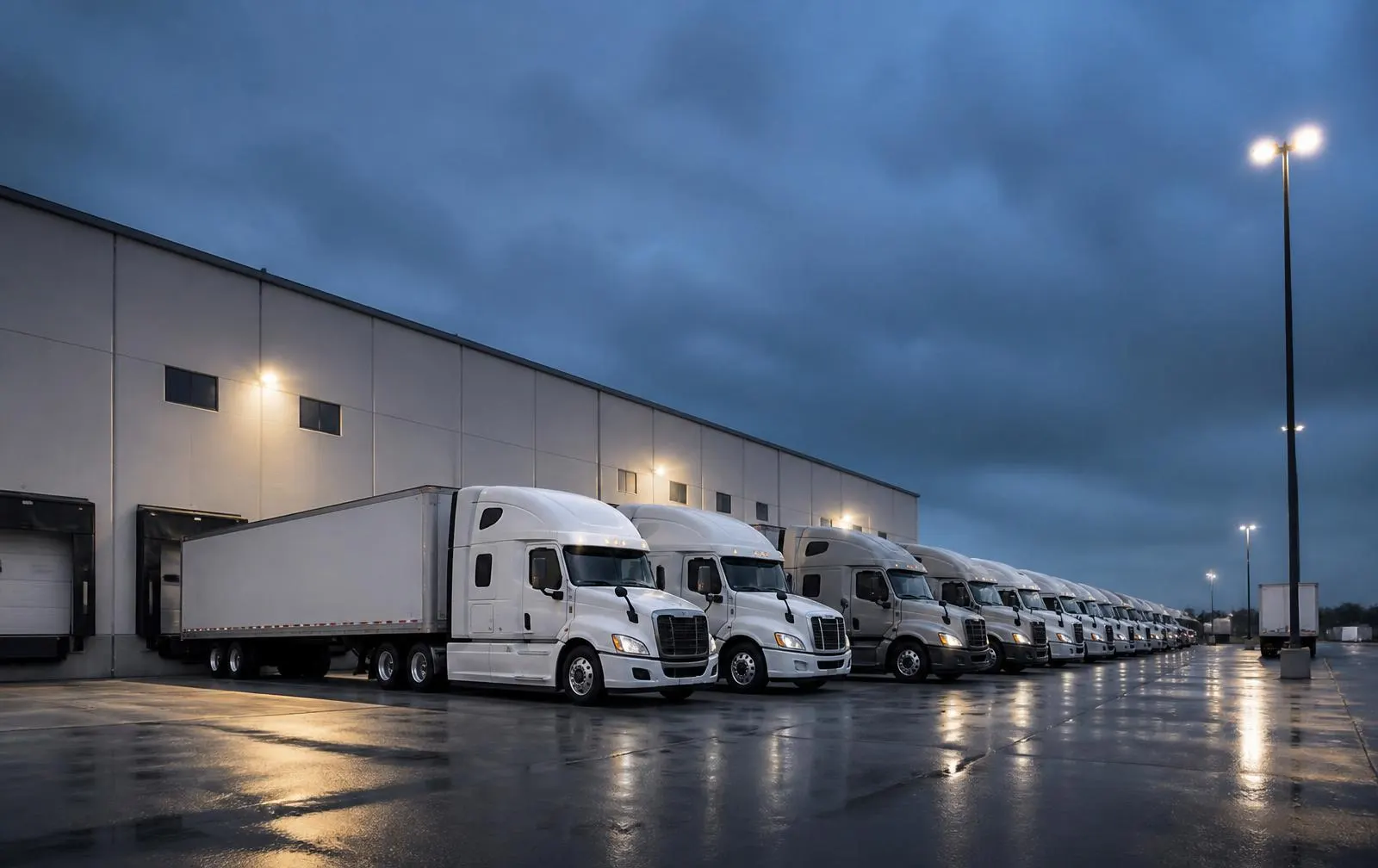
Commercial semi trucks parked at a distribution warehouse loading dock in metro Atlanta

For Fleet Operators

Fleet Maintenance & Mobile PM Services in Metro Atlanta

Fleet trucks do not need to leave the property to stay in good repair. Mobile fleet maintenance brings preventive service, inspections and minor repairs directly to where trucks are parked, keeping revenue equipment out of shop queues and away from unnecessary towing.

We work with fleets of every size — two trucks or two hundred — and structure service around your dispatch schedule rather than ours. That usually means overnight and weekend PM work at your yard, so units are ready to roll when drivers show up for their shift.

Most Atlanta-area fleet calls happen at the places where trucks naturally stop. We perform mobile service at truck yards, distribution centers, warehouses, loading docks, fleet facilities and commercial properties across the metro. If a unit is parked at a dock, backed against a warehouse wall, or lined up in a yard, our technician can work on it right there whenever the repair is safe and practical.

Fleet programs typically include scheduled preventive maintenance, oil and filter changes, fluid services, brake checks, electrical diagnostics, cooling-system inspections, battery and charging-system inspections, belts and hoses, and the minor repairs drivers flag but nobody has time to chase. Multi-truck service at one location is one of the best ways to simplify a maintenance calendar and keep the whole fleet on a similar cycle.

Servicing trucks where they are parked has real operational value. There is no driver time lost to a shop trip, no dispatch juggling to route a truck to a bay, and no waiting for a shop to open the next morning. Technicians come with the fluids, filters, tools and parts needed to complete the work on site, and the truck can go back to work as soon as the service is done.

Consistent documentation matters as much as the wrench work. Knowing which unit needed what and when is how you spot the truck that is quietly draining the budget, and how you defend your maintenance program during an inspection or audit.

Brake checks, electrical diagnostics and cooling-system inspections all happen at the yard on the same visit — more on why mobile service keeps trucks moving.

  • Scheduled PM programs
  • Fluid service and oil changes
  • Brake checks and air-system service
  • Electrical diagnostics
  • Cooling-system inspections
  • Battery and charging-system checks
  • Belts, hoses and minor repairs
  • Multi-truck service at one location
  • Night and weekend service windows
  • Inspection prep and defect follow-up

On-Site Service

Why Mobile Truck Repair Saves Time and Keeps Trucks Moving

The best repair for a truck that is not moving is often the one that comes to it. Mobile truck repair removes the extra steps that turn a small breakdown into a long day off the road.

Avoid unnecessary towing when a mobile repair is possible. Not every breakdown needs a wrecker. Air-system problems, electrical faults, cooling issues, battery or charging failures, belt and hose failures, sensor faults, DEF problems, brake issues and tire problems can often be repaired safely on the shoulder, at a truck stop, or in a parking lot. When the fix can be done at the truck, mobile repair removes the tow bill, the wait for a hook, and the risk of dragging a disabled unit down the road.

Reduce time spent waiting for a traditional repair shop. A shop repair means waiting for a bay, waiting for an estimate, and often waiting until the next business day if the failure happens after hours. Mobile repair cuts that queue out of the picture. A technician comes directly to the truck with the tools and common parts needed to diagnose and fix the problem on the spot.

Service trucks at a yard or warehouse. For fleet and local delivery trucks, the most efficient place for maintenance is right where the trucks sleep. Drivers can hand off the unit at the end of a shift, and technicians can work while the fleet is parked. The trucks are ready when the next shift starts, without anyone losing a day to a shop visit.

Help drivers get moving without relocating the truck. A driver whose truck fails on a route often has a narrow window to get back on schedule. Mobile repair lets the driver stay with the equipment, get the work done, and resume the route without the delay and paperwork of arranging a tow, finding a shop, and coordinating a pickup.

Service several fleet vehicles at one location. When a technician handles PMs, inspections and small repairs on multiple trucks at a single yard, the entire fleet stays on the same maintenance cycle. That predictability reduces surprise failures and simplifies scheduling for dispatch and maintenance managers.

Reduce unnecessary interruptions to delivery and fleet operations. Every mile a truck moves toward a shop is a mile it is not moving toward a delivery or a revenue load. Mobile repair keeps the downtime close to the breakdown, shortens the interval between the call and the fix, and helps drivers and fleets protect their schedules.

Where We Come

  • Truck yards and terminals
  • Distribution centers
  • Warehouses and loading docks
  • Fleet facilities and commercial lots
  • Highway shoulders and truck stops
  • Job sites and construction properties

What We Handle

  • Diesel diagnostics and fault codes
  • Air system and brake work
  • Electrical and charging issues
  • Cooling system and overheating
  • Batteries, belts, hoses and filters
  • Trailer lighting and landing gear

Who Benefits

  • Owner-operators
  • Small fleets
  • Regional carriers
  • Last-mile delivery trucks
  • Construction and vocational fleets
  • Distribution and drayage operations

How It Works

  • Call with location and symptoms
  • Technician loads parts and tools
  • On-site diagnosis and repair
  • Fix verified before we leave
  • Clear explanation of what was done

Truck Down in Atlanta? Get a Mobile Diesel Technician Moving.

Call ATL Mobile Truck Repair any hour, day or night. Tell us where the truck is sitting and what it is doing, and we will get a technician headed your way.

470-361-0273 · Open 24/7

Where We Roll

Atlanta Service Area

Based at 3020 Commerce Way SE, STE A in Atlanta and dispatching across the metro. If your truck is sitting inside or near the Perimeter, there is a good chance we can reach it.

City & Inside The Perimeter

  • Downtown and Midtown Atlanta
  • West End and Vine City
  • Buckhead
  • East Atlanta and Decatur
  • College Park and East Point
  • Hapeville and Forest Park

Metro Counties

  • Fulton County
  • DeKalb County
  • Clayton County
  • Cobb County
  • Gwinnett County
  • Henry and Douglas Counties

Corridors & Freight Hubs

  • I-285 Perimeter
  • I-75 and I-85 Connector
  • I-20 east and west
  • I-675 and GA-400
  • Hartsfield-Jackson cargo area
  • Truck stops and distribution parks

Surrounding communities including Decatur, East Point, College Park, Hapeville, Smyrna, Marietta, Mableton, Lithia Springs, Douglasville, Forest Park, Riverdale, Jonesboro, Tucker, Chamblee and Doraville are all within our normal dispatch range. If you are not sure whether your location is covered, call and tell us where the truck is — we will give you a straight answer instead of leaving you waiting. Already broken down inside this area? Go straight to emergency roadside truck repair.

Working The Atlanta Corridors

Most of the calls we run start on the same stretches of pavement that move freight through the Southeast. The I-285 Perimeter loop carries heavy truck volume around the clock, and a unit that loses air, power or a tire out there is sitting in one of the least forgiving places in the region. I-75 and I-85 through the Downtown Connector tighten up fast, and a stall in those lanes turns into a safety problem before it turns into a repair problem. I-20 runs east toward Conyers and west past Six Flags and Lithia Springs, I-675 links the south side to Henry County, and Georgia 400 handles the north-side runs into Sandy Springs and beyond.

When you call, the most useful thing you can give us is a mile marker, exit number or cross street. That single detail decides which route we take, what we stage on the truck and how fast we get wheels rolling toward you. We plan around the corridor you are actually on rather than a straight-line distance on a map, because in Atlanta the difference between the two can be forty-five minutes.

Freight Facilities, Yards And Docks

A large share of mobile diesel work in this market never happens on the shoulder at all. It happens in the places freight sits still: distribution centers, warehouse campuses, freight terminals, industrial parks and private truck yards. South of the city, the corridor through College Park, Hapeville, Forest Park, Riverdale and Jonesboro is dense with cargo facilities and airport-adjacent operations. West along I-20, Mableton, Lithia Springs and Douglasville carry large warehouse footprints. On the north and east sides, Smyrna, Marietta, Tucker, Chamblee, Doraville, Decatur and East Point mix industrial parks with commercial properties that see daily truck traffic.

We are set up to work in those environments. That means checking in at the gate or guard shack, following the site's safety and PPE rules, staying clear of active loading docks and yard traffic, and working within the window a facility gives us. If a driver is on a clock or a dock door needs to be cleared, tell us up front and we will prioritize getting the unit movable first and finish the rest where it is safe to do so.

Common Situations We Cover

Trucks down at a warehouse are one of the most frequent calls we take — a unit that backed into a dock fine and will not build air, start or move when it is time to pull out. Breakdowns near distribution centers are similar, usually within a mile or two of the gate, on a surface street or staging lot where the truck is blocking a lane other drivers need. Trucks disabled in fleet yards tend to be less urgent for traffic but more urgent for scheduling, since a unit stuck in a yard is a load that is not going out in the morning.

Roadside breakdowns on the interstates get triaged for safety first: get the truck reachable, get the repair done where it can be done safely, and get it off the shoulder. For commercial vehicles parked at business facilities — construction sites, service depots, retail lots, municipal properties — we can often perform the work while the vehicle is already stopped for the day, which avoids a tow and a shop appointment entirely.

In every one of these cases the approach is the same. We diagnose on site, tell you plainly whether it is a repair we can complete where the truck sits, and if it genuinely needs a shop we say so rather than burning your hours proving it.

Why Local Knowledge Matters Here

Atlanta traffic is not a minor detail in mobile repair — it is the job. Response time depends on which side of the Perimeter you are on, what time of day it is and whether the corridor between us is moving. A call from Chamblee at two in the afternoon and the same call at two in the morning are two different jobs. Knowing which yards have restricted access hours, which industrial parks have tight turning radiuses for a service truck, and which stretches of shoulder are too narrow to work safely changes how we plan the run.

Atlanta remains our primary market and the center of everything we do. The surrounding communities listed above are served as part of that same metro footprint, not as separate territories with different standards. Same phone number, same 24/7 dispatch, same straight answers about whether we can reach you and what it will take once we do.

The Difference

Why Choose ATL Mobile Truck Repair

We are built around one idea: a commercial truck that is not moving is not earning. Everything we do is aimed at shortening the gap between the breakdown and the next mile.

Truly Mobile

We come to the truck. Shoulder, truck stop, dock, yard or job site — the tools, parts and diagnostics travel with the technician.

Around The Clock

Freight moves at night and so do we. The phone is answered 24 hours a day, seven days a week, holidays included.

Heavy-Duty Focus

Commercial trucks, trailers and diesel equipment are what we do. This is not a car shop that occasionally takes truck work.

Diagnostics First

We identify the failing component before replacing parts, which keeps the repair honest and the invoice defensible.

Driver-Friendly

Drivers get plain explanations, realistic timelines and respect for their clock. Nobody gets talked down to.

Fleet Ready

Scheduling, recurring PM and priority handling for fleets that need trucks back in service on a predictable rhythm.

Local Knowledge

Atlanta traffic, corridors, truck stops and warehouse districts are familiar ground, which shortens the time between the call and the arrival.

Straight Pricing Talk

Scope and approach are explained before work starts. If a repair is better handled in a shop, we say so.

One Number

No portals, no ticket queues, no email chains. Call 470-361-0273 and talk to someone who can dispatch.

Sample Testimonials

Example Customer Experiences

The review-style cards below are sample placeholders to illustrate the kind of feedback ATL Mobile Truck Repair hopes to feature from real customers. These are not live reviews or verified testimonials.

Emergency Roadside Repair
“I blew an air line on I-285 late at night and figured I was stuck until morning. The tech came out, found the leak, and got my air pressure back up. I was rolling again the same night.”
Marcus·Owner-Operator
Diesel Engine Repair
“My Class 8 started losing power with a derate warning. They pulled the codes, traced it to the aftertreatment system, and explained the repair before anything was done. Straightforward work.”
Darryl·Day Cab Driver
Fleet Maintenance
“We run a small delivery fleet and they handle our preventive maintenance at the yard on weekends. Our trucks are ready Monday morning and we have stopped losing days to shop visits.”
Angela·Fleet Manager
Trailer Repair
“Trailer lights went out on a loaded run through Atlanta. The tech met me at the truck stop, wired the trailer, and got me legal so I could keep moving instead of waiting overnight.”
James·Regional Driver
Brake Repair
“Brakes were pulling hard and the air system was not holding pressure like normal. They diagnosed the issue, replaced the worn components, and tested the system before leaving.”
Roberto·Box Truck Driver
Electrical Diagnostics
“A no-start in a warehouse lot left me with a delivery window closing. The tech traced it to the charging system and walked me through what failed and what to watch for next.”
Keisha·Local Delivery Driver

Questions

Mobile Truck Repair FAQ

Straight answers to what drivers and fleet managers in Atlanta ask most often. If your truck is down right now, skip ahead and call a technician.

How quickly can mobile truck repair arrive in Atlanta?+

Arrival time depends on where the truck is located, what traffic looks like on the Atlanta interstates, and how many calls are already in progress. We dispatch as soon as we have the details we need, and we will give you a realistic estimate based on the current location of our nearest technician and the route to your truck. Calling is the fastest way to get started, because being ready with the exact location, make, engine, and symptoms helps the technician load the right tools and parts before heading out.

Is ATL Mobile Truck Repair available 24/7?+

Yes. We operate around the clock, seven days a week, including holidays, weekends, and overnight hours. Freight does not follow a nine-to-five schedule, and truck failures rarely happen at convenient times. When you call, you reach a live dispatcher who can send a mobile diesel technician to your location. There is no separate after-hours number and no voicemail-only emergency line. We are built to handle late-night roadside calls, early-morning warehouse breakdowns, and weekend fleet emergencies anywhere in the Metro Atlanta area.

Can you repair trucks on Atlanta interstates?+

Yes, we regularly work on the shoulders and ramps of I-285, I-75, I-85, I-20, I-675, and GA-400, as well as at truck stops, rest areas, and exit ramps. Safety is the first priority on any interstate call, so we will help you make sure the truck is in a stable position, that the driver is in a safe location, and that warning devices are visible. Some conditions require a tow for safety, but many highway failures can be repaired right on the spot.

What kinds of commercial trucks do you service?+

We service a wide range of commercial vehicles, including Class 6, 7, and 8 trucks, semi trucks, day cabs, sleeper trucks, box trucks, dump trucks, flatbed trucks, refrigerated trucks, utility trucks, service trucks, tow trucks, bucket trucks, concrete mixers, refuse trucks, vacuum trucks, and yard tractors. We also work on fleet vehicles, liftgate delivery trucks, and service-body trucks. If you are not sure whether your truck fits, call and describe it.

Do you repair trailers and refrigerated trailers?+

Yes. Trailer repair is a regular part of our mobile service. We handle trailer lighting, brake systems, air lines, glad hands, valves, landing gear, doors, seals, and tires. For refrigerated trailers, we also address common electrical, cooling, and refrigeration support issues that can leave a load at risk. A tractor that runs perfectly is still parked if the trailer is not roadworthy or legal, so we treat trailer problems with the same urgency as tractor problems.

Do you provide fleet maintenance?+

Yes, mobile fleet maintenance is one of the most efficient ways to keep a fleet in compliance and on schedule. We perform preventive maintenance, fluid services, oil and filter changes, brake checks, electrical diagnostics, cooling-system inspections, battery and charging-system checks, belts and hoses, and minor repairs at your truck yard, warehouse, distribution center, or fleet facility. Multi-truck service at one location is common, and we frequently schedule work on nights and weekends so trucks stay in revenue service during the day.

Can you diagnose DPF and emissions problems?+

Yes. Our technicians carry diagnostic equipment for modern diesel engines and can pull fault codes, read live data, and trace the root cause of DPF, DEF, and emissions-related problems. We commonly see regen failures, DEF injector issues, clogged DPFs, NOx sensor faults, and check-engine lights that result in derates. After we identify the cause, we explain the repair and verify that the fault has cleared before the truck heads back out.

Can you repair an overheating truck?+

Yes, overheating is one of the more common calls we get in Atlanta, especially during the summer heat and heavy traffic on the interstates. We diagnose the source of the problem, whether it is a coolant leak, a failed water pump, a bad thermostat, a fan-drive issue, a clogged radiator, or a blown hose. Many overheating issues can be repaired on site, but if the engine has been overheated severely or has internal damage, we will tell you plainly if a shop is the safer next step.

What areas around Atlanta do you service?+

We dispatch throughout Metro Atlanta, including Fulton, DeKalb, Clayton, Cobb, Gwinnett, Henry, and Douglas counties. We also serve surrounding communities such as Decatur, East Point, College Park, Hapeville, Smyrna, Marietta, Mableton, Lithia Springs, Douglasville, Forest Park, Riverdale, Jonesboro, Tucker, Chamblee, and Doraville. We routinely cover the major freight corridors, including I-285, I-75, I-85, I-20, I-675, and Georgia 400, as well as truck stops, distribution centers, and warehouse districts. If you are unsure whether your truck is in our range, call with the exit number or mile marker and we will give you a straight answer.

When does a truck need towing instead of mobile repair?+

Mobile repair is the right choice when the failure can be diagnosed and repaired safely where the truck sits. Towing is the better option when the damage is severe, such as major internal engine failure, transmission overhauls, heavy frame or axle damage, or when the truck is in an unsafe location that cannot be stabilized. We never string a driver along with false hope; if a mobile repair is not practical, we will explain what we found and recommend the next step.

Can you repair trucks at warehouses and distribution centers?+

Yes, warehouses and distribution centers are some of the most common places we work. Trucks often fail while waiting to load or unload, or after a driver discovers a problem during a pre-trip check. We can service units at docks, in parking lots, behind buildings, or in loading lanes when it is safe to do so. We carry the tools, diagnostics, and common parts needed to handle many repairs on site without the truck ever leaving the property.

Can you service trucks at fleet yards and loading docks?+

Yes, fleet yards and loading docks are ideal locations for mobile service. We can work on multiple trucks at one facility, perform preventive maintenance on parked units, and handle repairs that drivers flag between shifts. Servicing trucks where they sleep saves the fleet from losing road time to shop visits, and it makes scheduling easier because the work happens when the trucks are already off the road. Night and weekend windows are common for this kind of fleet work.

What if my truck will not build air pressure?+

Low or no air pressure is a common roadside problem, and it can be caused by a compressor failure, a leaking air line, a bad air dryer, a faulty governor, or leaks in the brake system or accessory circuits. We test the compressor output, inspect the air dryer and lines, and locate the source of the leak. If the repair can be completed safely on site, we do it there. If the failure involves a major component that requires shop tools, we will tell you honestly.

What information should I provide when calling for mobile truck repair?+

The most useful details are the exact location of the truck, including the exit number or mile marker if you are on an interstate; the year, make, and engine; the unit number if you have one; a description of the symptoms or any dash warning lights and fault codes; and whether the truck is loaded. That information lets the technician load the right parts and tools before leaving, which often makes the difference between a single-visit repair and a return trip.

Still have a question about your truck? The fastest answer is a phone call — get a mobile diesel technician moving.

Truck Down in Atlanta? Call Now.

24/7 mobile truck repair, roadside diesel service and fleet maintenance across Metro Atlanta. One phone call puts a diesel technician on the way to your truck.

Available 24 Hours · 7 Days a Week

ATL Mobile Truck Repair

Mobile truck repair, roadside diesel service and fleet maintenance for commercial vehicles throughout Atlanta, Georgia and the surrounding metro area.

Contact

ATL Mobile Truck Repair

3020 Commerce Way SE, STE A
Atlanta, GA 30354

470-361-0273

Hours: Open 24 hours, 7 days a week

Services

  • 24/7 Emergency Mobile Repair
  • Roadside Diesel Repair
  • Semi Truck Repair
  • Trailer Repair
  • Diesel Diagnostics
  • Air Brake Service
  • Tire Service
  • Fleet Maintenance
© 2026 ATL Mobile Truck Repair · Atlanta, GA · All rights reserved.
Call 470-361-0273 · 24/7